
Last updated November 18, 2026
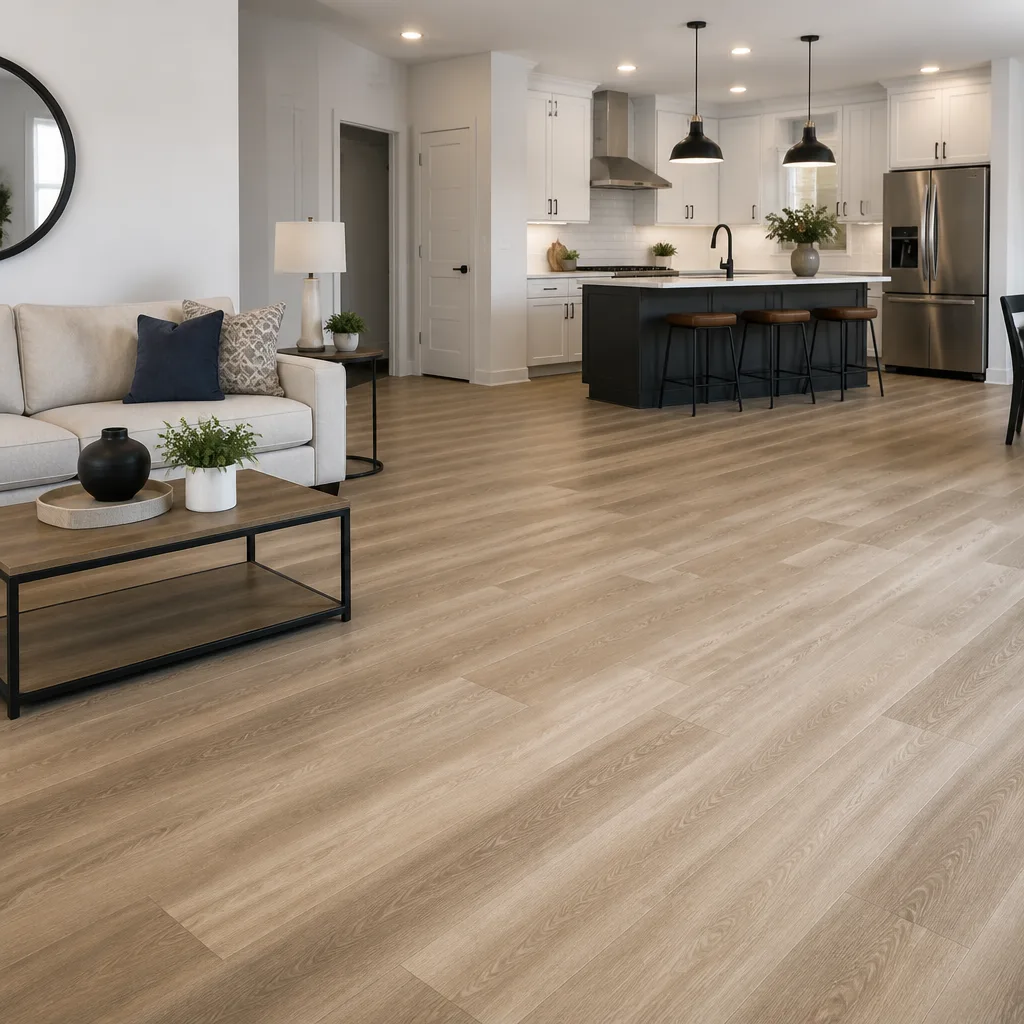 Luxury vinyl plank
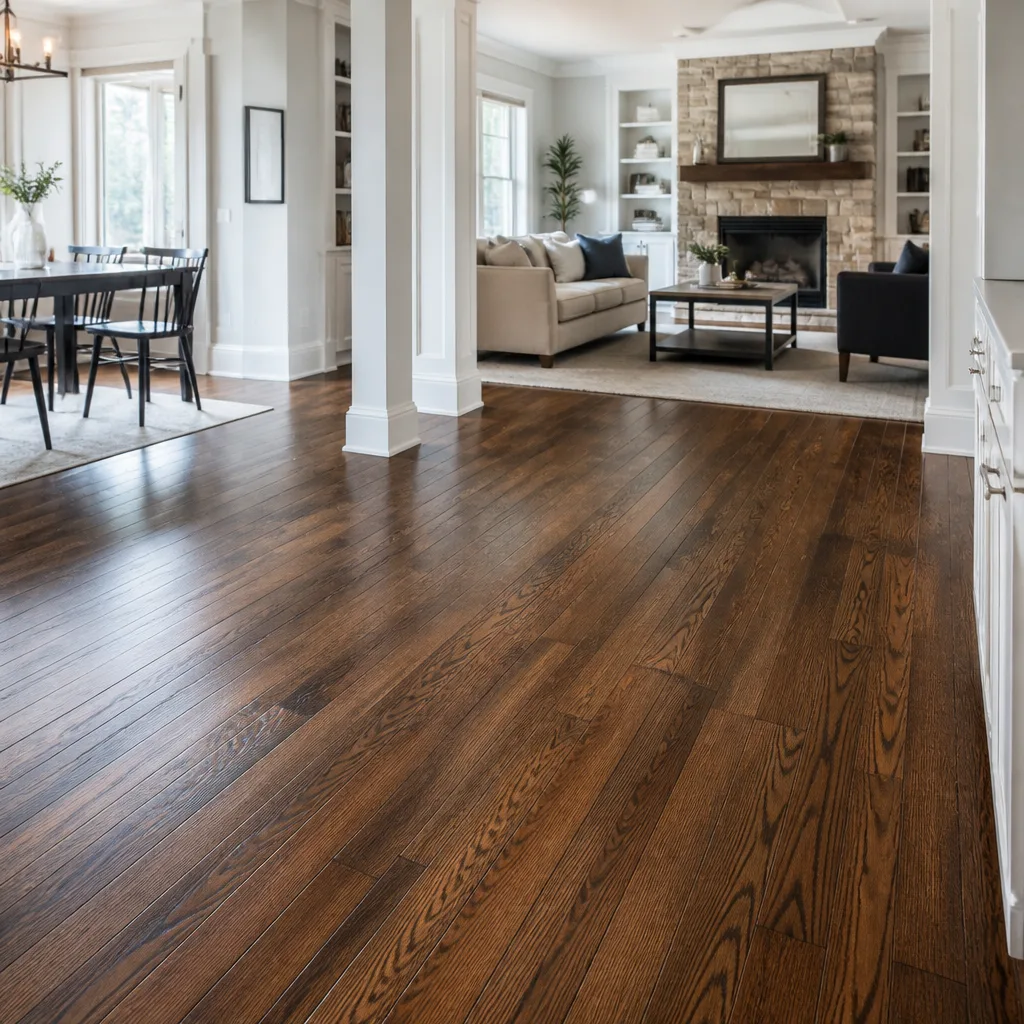 Hardwood
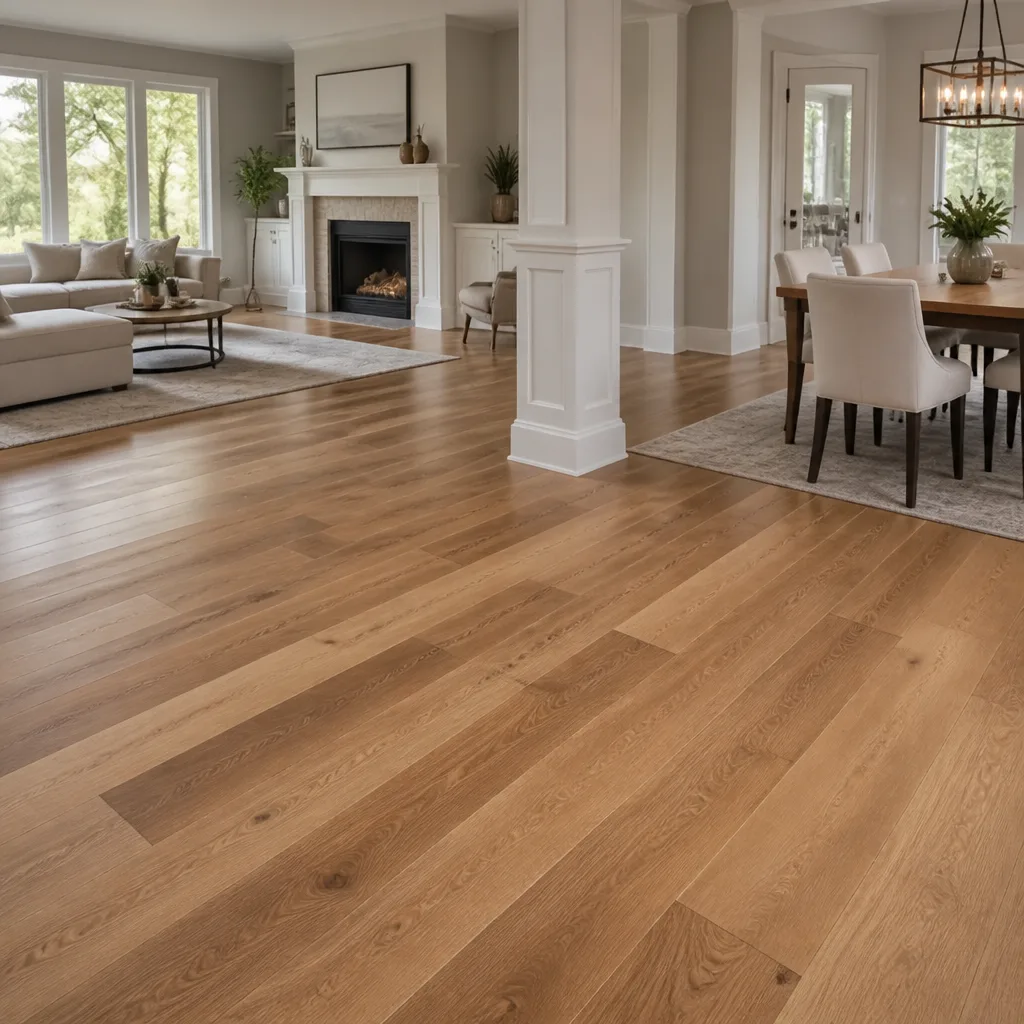 Engineered hardwood
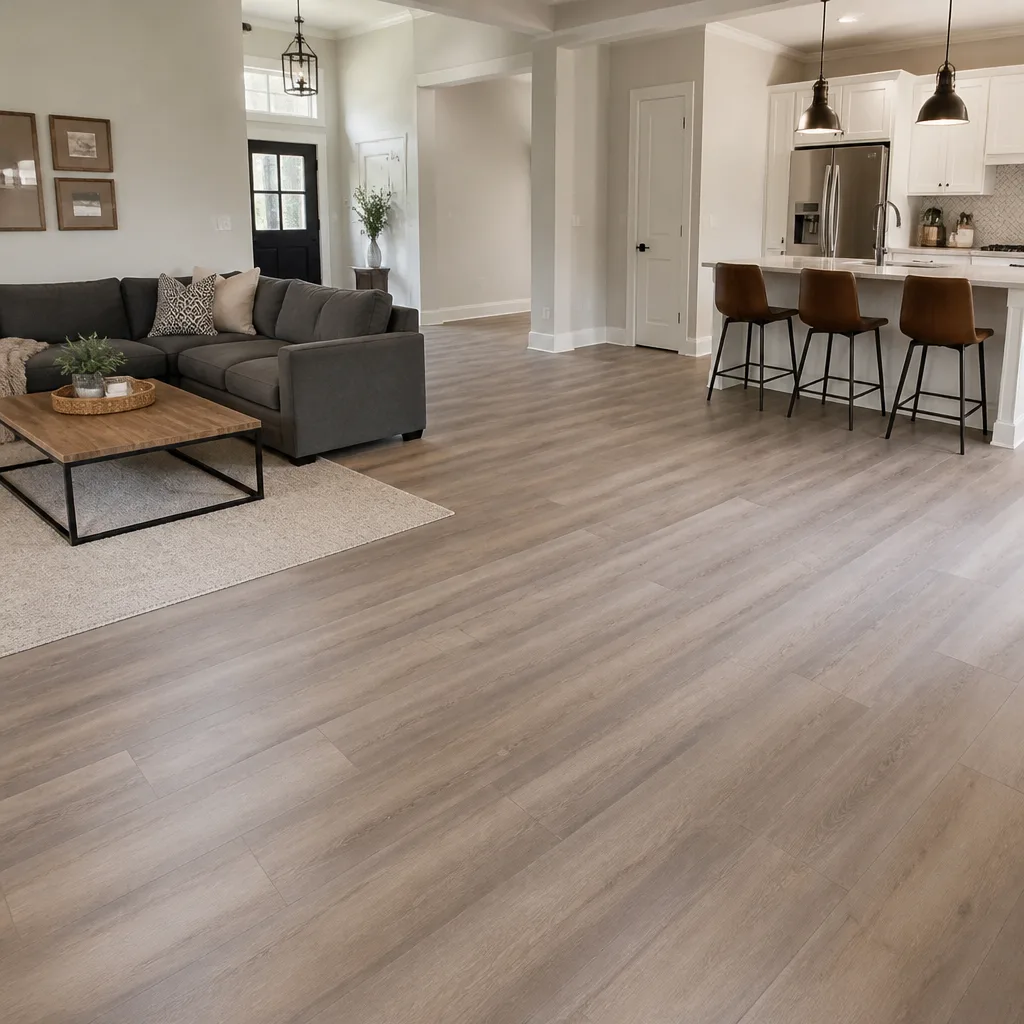 Laminate
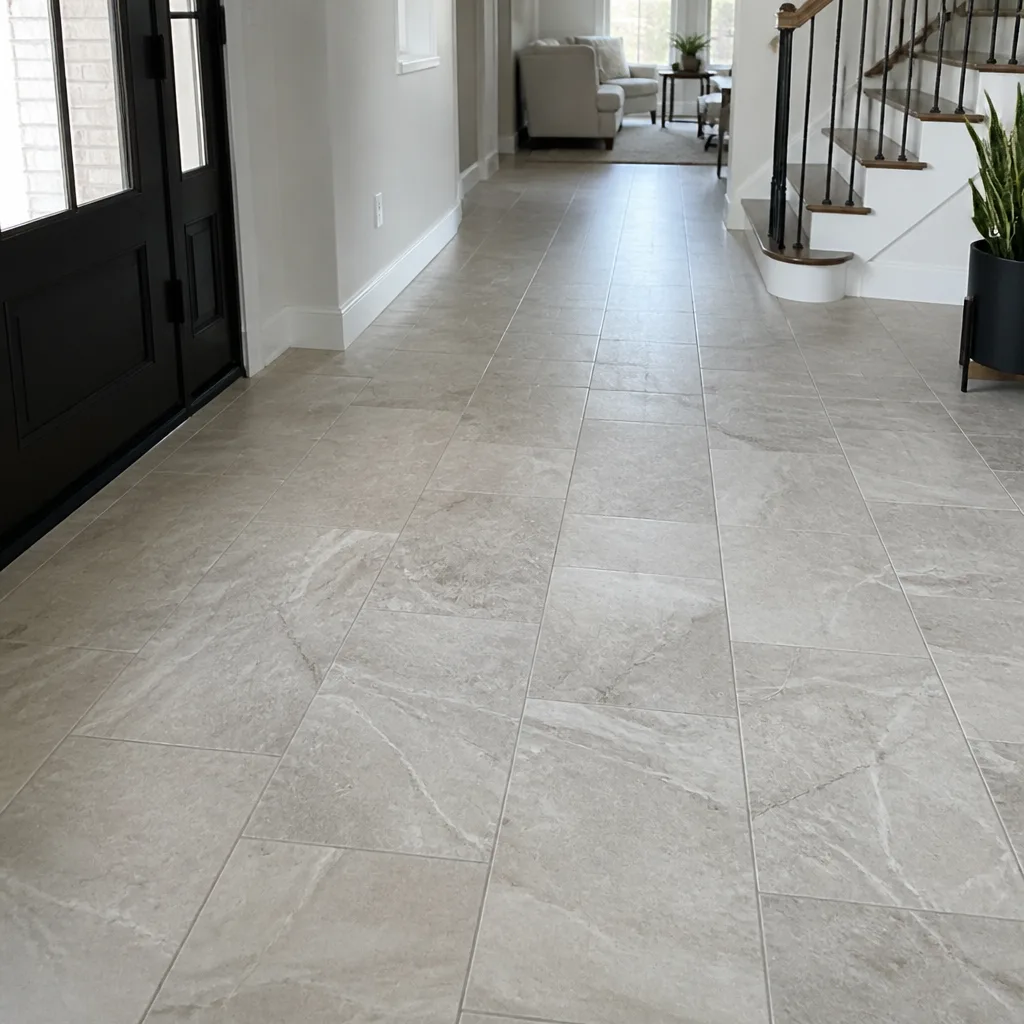 Porcelain tile
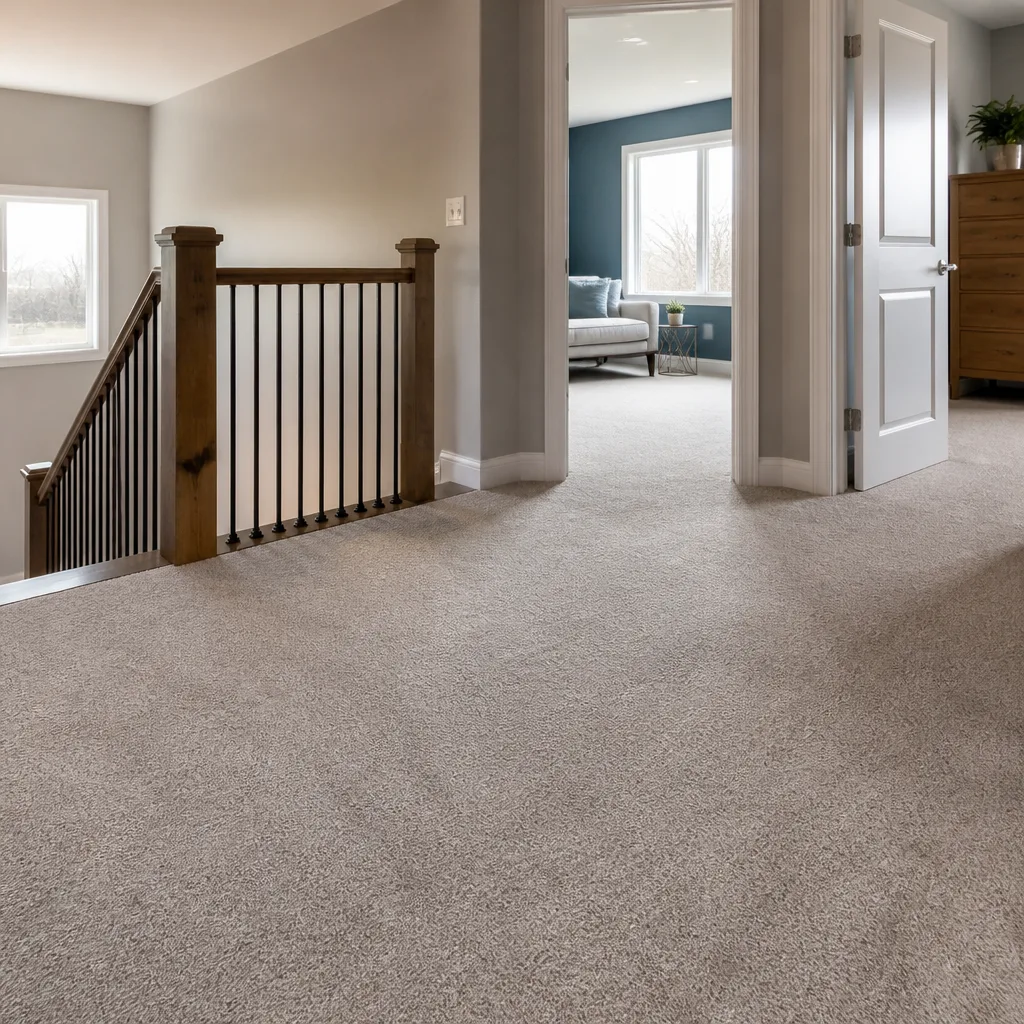 Carpet
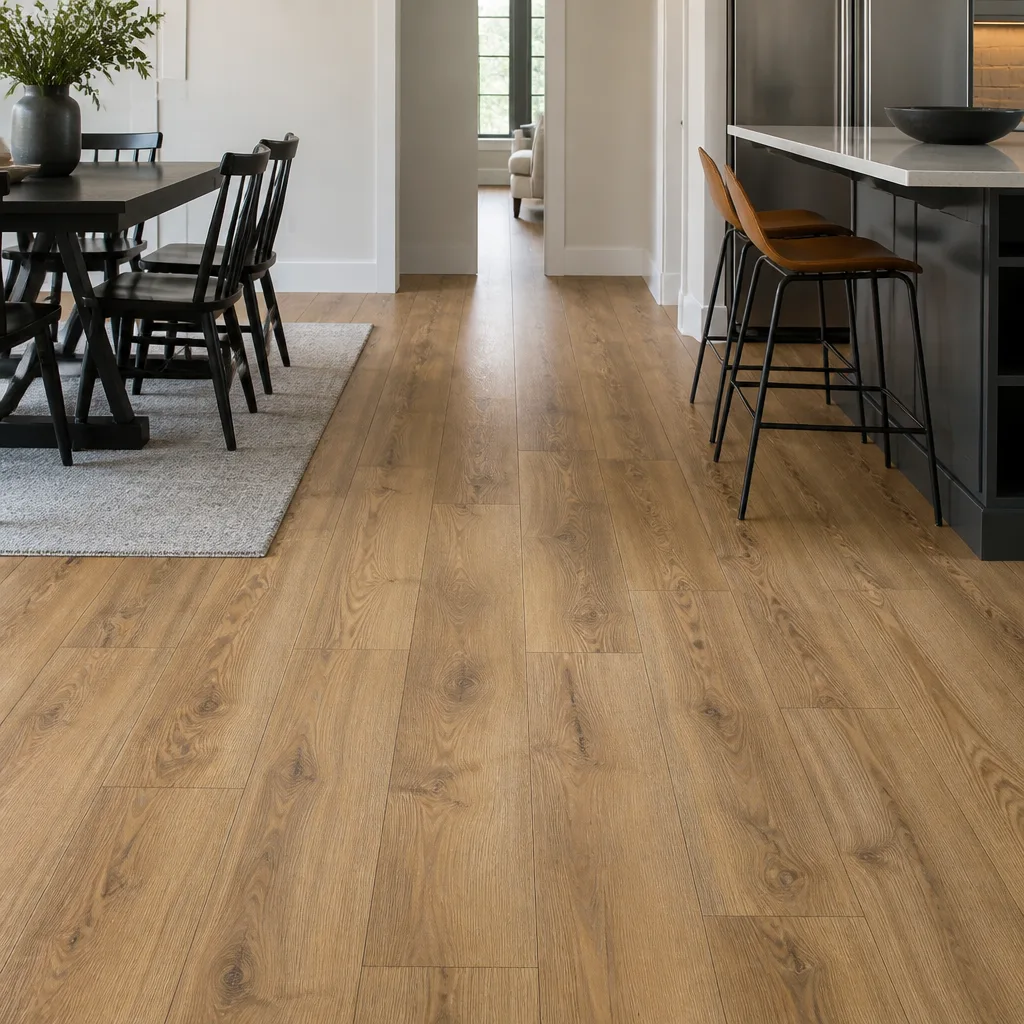 Shaw
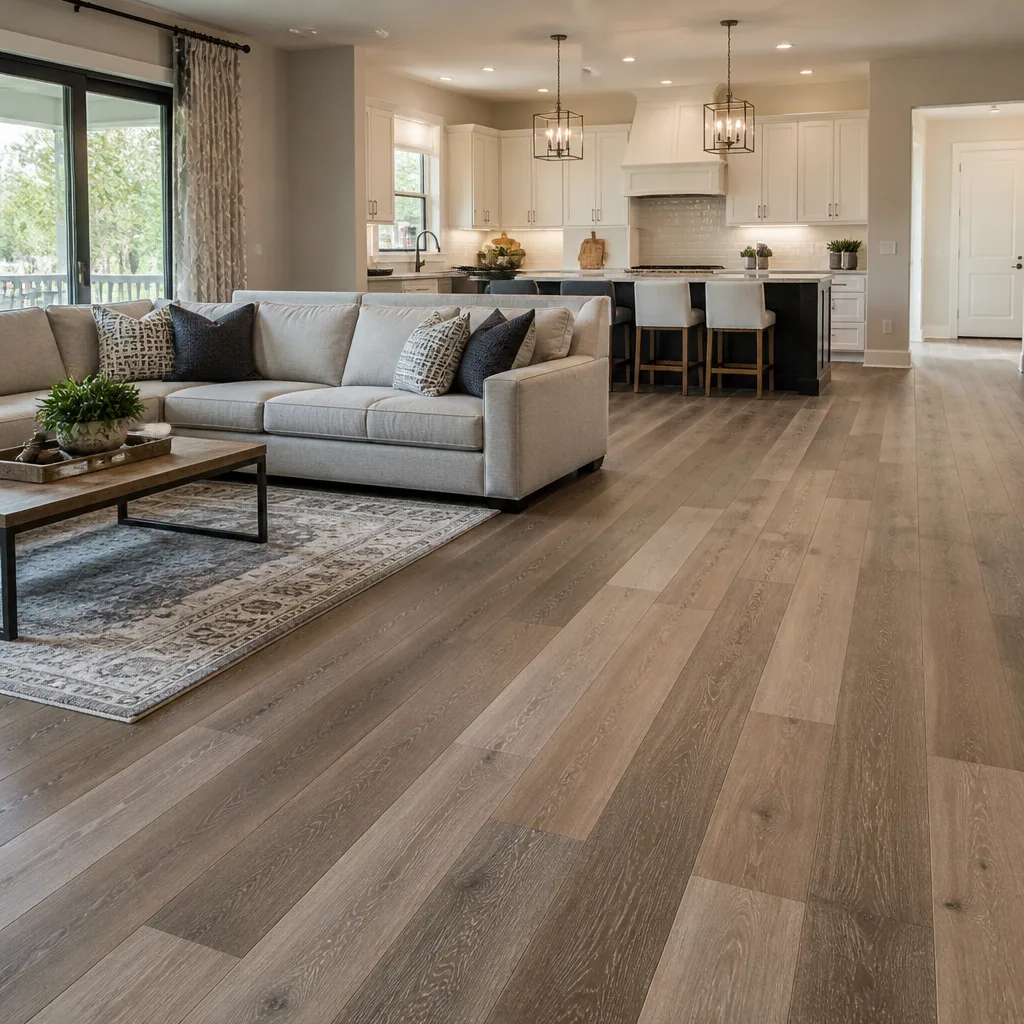 Mohawk
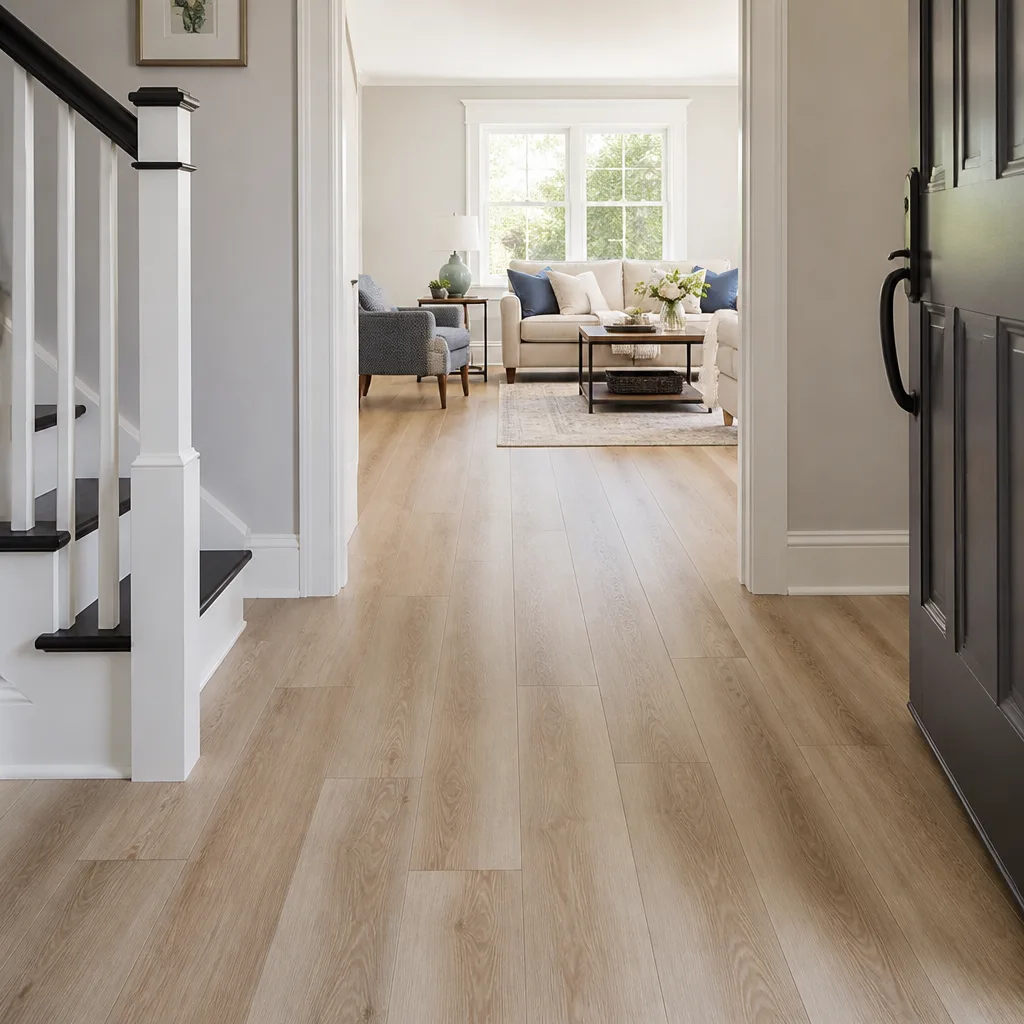 COREtec
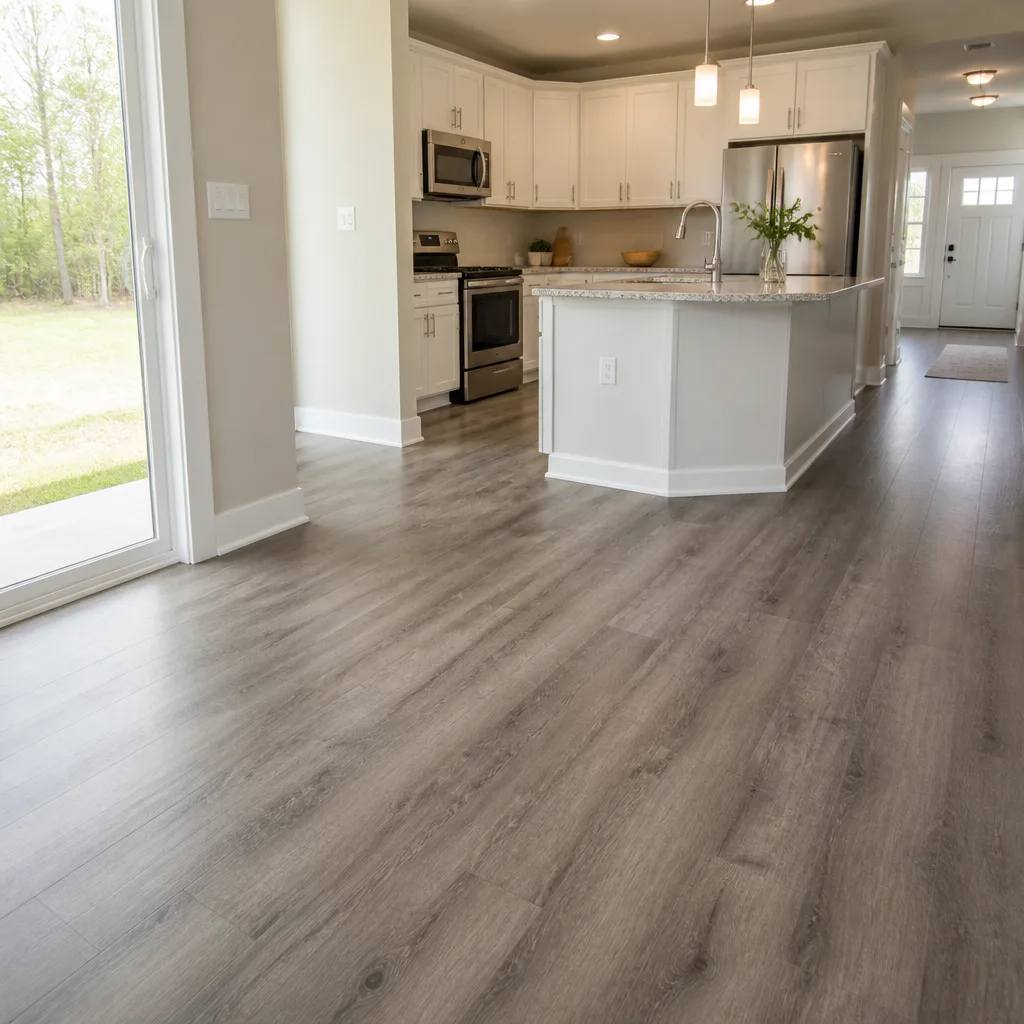 Pergo
Free in-home measure and written estimate: Shaw, Mohawk, COREtec and Pergo lines compared on your own rooms, with carpet, tile, vinyl plank, laminate and hardwood laid out side by side
Get your free estimateHardwood, Vinyl Plank, Laminate or Tile: How Summerlin Homeowners Decide
Most flooring conversations in Summerlin start in the wrong place. Someone asks “hardwood or vinyl plank?” and the answer they get is about looks, or about what a design feed said was trending. That question skips the fact that decides everything else: Summerlin sits on slab-on-grade foundations. Your floor is laid directly over concrete that takes on heat through the day and sits at grade level, and that single characteristic changes how each material behaves, how it’s installed, and how long it lasts. Trend cycles don’t care about your slab. The right floor does. This guide walks through how each material actually performs on a Summerlin slab, the real durability hierarchy for desert households, and what buyers in Summerlin’s price brackets notice when they walk through a home.
Quick Answer
On Summerlin’s slab-on-grade foundations, the material that fits best depends on moisture, sun exposure, room use, and how long you plan to stay. Tile and luxury vinyl plank (LVP) handle slab conditions with the fewest complications. Engineered hardwood brings real wood to a slab but needs proper attention to moisture and acclimation. Solid hardwood is a defensible choice over a slab with the right build-up, but it’s the most demanding. Laminate still makes sense in specific rooms and fails badly in others. The final call is made at a free in-home measure, where the floor’s condition, not a trend, sets the recommendation.
Styles & brands we work with
- Hardwood
- Engineered hardwood
- Luxury vinyl plank
- Laminate
- Porcelain tile
- Carpet
- Shaw
- Mohawk
- COREtec
- Pergo
Table of Contents
- What slab-on-grade construction does to each material
- The real durability hierarchy for a desert household
- What engineered hardwood actually is, and why it performs differently
- Where laminate still makes sense in 2026, and where it doesn’t
- Tile, Daltile, and where Summerlin’s tile shines
- Resale signal in Summerlin’s price brackets
- Refinish before you replace: the hardwood question homeowners skip
- How a Summerlin flooring project actually runs
What Slab-On-Grade Construction Does to Each Material
Almost every home in Summerlin is built on a concrete slab poured at grade, and that single fact drives more flooring decisions than color, style, or brand. A slab is a giant thermal mass. It moves heat slowly through the day and releases it slowly into the evening. It also carries the moisture profile of the ground beneath it, and that profile varies block to block depending on soil, drainage, and how the home was graded. Every material reacts to that environment differently, and knowing which reactions matter saves you from a floor that looks great on day one and disappoints in two summers.
Here’s how each material behaves over a Summerlin slab:
- Tile doesn’t care about the slab’s moisture. Ceramic and porcelain (including tile flooring installation using Daltile) sit on a thin-set mortar bed over a properly prepared slab, so small movement and moisture vapor don’t affect the surface.
- Luxury vinyl plank is generally installed floating over a vapor barrier or glued directly with adhesive rated for slab moisture. The material itself tolerates humidity and small changes in temperature well. Standing water and moisture pushing up from below still need to be dealt with, so it’s water-resistant, not magical.
- Engineered hardwood moves with the seasons because wood does. Over a slab it’s installed floating over a moisture barrier or glued down with a system designed for concrete. It needs acclimation in the home before it goes down, and the slab’s moisture needs checking first.
- Solid hardwood is the most demanding. It’s typically installed over a plywood subfloor built up on the slab (with a vapor barrier) or glued down with the right system. Movement, moisture, and acclimation have to be handled correctly, and even then the wood will move a little with the seasons.
- Laminate floats over an underlayment that includes a vapor barrier. It’s stable over a slab, but standing water from a leak or an appliance failure is its weak point.
Summerlin’s sun matters too. Large west- and south-facing windows drive heat into the floor near glass. Tile handles that with no issue. LVP handles it within the product’s tolerances. Wood will fade and move over time near intense sun, and that’s a design consideration, not a defect.
The Real Durability Hierarchy for a Desert Household
Marketing claims are useless here. What matters is: for a Summerlin home with dogs, kids, and adults who walk in from a hot driveway or step out of heels, which floor holds up best over ten years? Ranked from most resilient to most careful, here’s how the materials stack up in real households.
- Porcelain tile. Nothing beats it for scratch resistance, water tolerance, and thermal stability. Dropped pans can crack a tile, but the tile itself barely wears. Best for entry, kitchen, bath, laundry, and high-traffic hallways.
- Luxury vinyl plank. Built for daily life. Surface layers handle pet nails and dropped items reasonably well, and water spills on top are easy to manage. Under heavy sun and constant traffic, the wear layer is what determines how long the finish looks new.
- Engineered hardwood. The top veneer can be refinished depending on its thickness (checked at the estimate), and it takes a scratch or a dent the way wood does: visibly, but gracefully. Best for living and dining areas, primary bedrooms, and rooms where the look matters more than the abuse.
- Laminate. Its wear layer is genuinely tough against scratches and dents, but it doesn’t love water and can’t be refinished. Great in bedrooms and low-moisture living spaces, poor in bathrooms, laundry rooms, and anywhere a pet bowl spills daily.
- Solid hardwood. Beautiful, repairable, and long-lived, but it shows everything. Dogs leave scratches. High heels leave dents. Sun fades it. It’s a lifestyle choice as much as a floor choice.
The practical upshot: in a busy Summerlin household, we often recommend a mix. Tile in the wet and high-traffic zones, LVP through hallways and family rooms, and engineered hardwood or a refinishable solid in the rooms where the wood look carries the home. It’s the same Flooring Summerlin approach to every project: material-matched installation, where each surface gets the crew and the method it actually needs.
What Engineered Hardwood Actually Is, and Why It Performs Differently
Engineered hardwood is real wood on top, layered plywood or high-density fiberboard underneath. The top is a veneer of actual hardwood, ususally 2 to 6 millimeters thick in the products we install. The layers below are cross-laminated, which is what makes it more dimensionally stable than solid wood. That stability is exactly why engineered is common over Summerlin slabs: it handles the small seasonal movement that comes with a slab’s temperature cycles without the pronounced cupping and gapping you’d see in a solid plank that wasn’t installed with a proper subfloor build-up.
What you should know structurally:
- The veneer thickness determines whether it can be refinished and how many times. A thicker veneer gives you more sanding life, but the number of refinishes depends on how much material is left after the sanding passes are done. The estimate visit is where we measure that, not the brochure.
- The core determines how it behaves over a slab. Plywood cores handle moisture reasonably well. HDF cores are more susceptible to swelling and require a tighter vapor barrier.
- The install method matters as much as the product. Over a slab, engineered is typically floated over a moisture barrier with an underlayment, or glued down with an adhesive system built for concrete.
- Acclimation happens in your home, not the installer’s warehouse. The material needs time in the room where it will live so it can reach equilibrium with the indoor conditions. The product instructions and the estimate set how long for a given product.
Brands like Mannington and Karndean (Karndean for luxury vinyl, Mannington across several categories) give homeowners a range from budget-friendly to premium tier, and the question isn’t which brand is “better” but which product within the brand fits your room, your slab conditions, and how you live.
Where Laminate Still Makes Sense in 2026, and Where It Doesn’t
Laminate got written off in flooring circles around 2018, and that was too fast. Modern laminate, including quality lines from Armstrong and Pergo, has genuinely tough wear layers, tight locking systems, and a look that fools most people into thinking it’s wood. Over a Summerlin slab it behaves well when installed correctly with a proper vapor barrier. It’s also genuinely water-resistant on top; it is not a flooring product we’d call waterproof, and standing water is its enemy.
Where laminate earns its place in a Summerlin home:
- Bedrooms. Low moisture, moderate traffic, and laminate gives you a wood look at a friendlier price point. A good fit for guest rooms, secondary bedrooms, and children’s rooms.
- Home offices. Stable, quiet, comfortable underfoot, and easy to keep clean.
- Formal living or dining rooms where you want the aesthetic but don’t put the room through daily heavy use.
- Rental or second homes where you want a durable, attractive floor without the upkeep of solid wood.
Where it categorically doesn’t belong:
- Bathrooms, laundry rooms, or powder rooms. Water finds its way to the base of the wall or around the toilet flange, and laminate will swell at the edges before you notice anything on the surface.
- Kitchens with a dishwasher leak risk or where a pet bowl sits in the same spot daily.
- Entryways that take in windblown rain or where the pool comes back in.
The right answer for a laminate room is about moisture exposure and abuse pattern, not style preference. If the room is dry and the traffic is moderate, laminate is a sensible floor. If water or daily hard use is on the table, we steer you toward LVP or tile.
Tile, Daltile, and Where Summerlin’s Tile Shines
Tile doesn’t get the design attention of hardwood or the trend authority of LVP, but in Summerlin it’s often the most practical floor in the house. Porcelain and ceramic shrug off desert temperatures, heat from big windows, moisture from pools and bathrooms, and pet accidents in a way no other material does. The tile flooring installation that serves Summerlin homes best starts with a proper slab preparation and a layout that plans for full tiles at doorways and sight lines, not against a wall where you never look.
Daltile brings professional-grade ceramic and porcelain options that are typically sourced through trade accounts rather than retail aisles, and that access matters. It means you’re choosing from tile that’s meant to be installed by professionals, in sizes and formats that will hold up to Summerlin’s heat cycles and traffic without the surface showing its age in a couple of seasons.
Where tile is the clear winner:
- Entryways and mudrooms, where grit and heat come in together.
- Kitchens, where dropped pans and spills happen.
- Bathrooms and laundry rooms, where water is on the floor.
- Patio-adjacent rooms where doors open to the outdoors.
- Whole-home installs in homes that lean toward the clean-lined look.
Where tile is a compromise:
- Bedrooms, where hard and cool underfoot is a comfort issue.
- Living rooms, if your household is crawling-age or loves to sit on the floor.
- Rooms with heavy foot traffic where grout lines will need periodic cleaning maintenance.
Tile’s tradeoff is comfort and grout maintenance. Its payoff is that 20 years from now, after dogs, kids, and desert temperature swings, the floor you still have is tile.
Resale Signal in Summerlin’s Price Brackets
Buyers in Summerlin’s price brackets notice floors faster than almost any other finish. In a community where many homes compete on similar square footage, age, and layout, the floor is one of the few things that separates one listing from another as buyers walk through. What buyers actually perceive differs by material, and it’s worth knowing how that lands before you commit.
- Tile in the main living areas reads as durable, low-maintenance, and desert-appropriate. Buyers in Summerlin see tile as the right material for the climate and the lifestyle, and its negotiation power is steady. It’s not a “wow” moment, but it removes objections.
- Engineered or solid hardwood in living and dining areas is a genuine premium signal. Buyers understand that real wood costs more and generally treat a well-kept hardwood floor as a positive.
- Luxury vinyl plank reads as practical and updated when it’s well installed. The perception problem for LVP comes from cheap boards with visible repeating patterns. Quality LVP from COREtec, LifeProof, or Karndean in a good pattern looks like what it’s meant to look like.
- Laminate is the most polarizing in the resale conversation. In bedrooms and offices it’s neutral to positive. In main living areas or living rooms, buyers often mentally deduct the cost of replacement.
- Refinished hardwood is the strongest signal-to-cost ratio in a Summerlin home with existing but worn wood. Newly refinished planks read as “careful owners” and offer buyers a floor they don’t have to touch.
We’d stop short of quoting a dollar return on any floor, because every appraisal and every buyer is different. What we will say: floors that look intentional and well-installed hold their standing in the Summerlin market, and floors that look like a shortcut get negotiated against.
Refinish Before You Replace: The Hardwood Question Homeowners Skip
If you have hardwood already and it’s tired, gray, scratched, or showing the old orange finish from an earlier decade, the first question isn’t “what should I replace it with?” It’s “can this floor be refinished?” Hardwood refinishing is one of the services we treat as a first-class option, not an add-on. For a Summerlin home with sound existing wood, a refinish restores the floor to near-new condition without the demolition, the waste, or the cost of a full replacement.
Here’s how a refinish decision runs in order:
- The estimate visit. We check the wood’s thickness and condition, look for gouges, cupping, or spots where the wear has cut through the top layer, and identify the species if possible. The refinisheability depends on that.
- Sample and stain choice. A stain is chosen against a sample, though the actual result depends on the species, the age of the wood, and how much sanding the floor needs. Not every stain will match a sample exactly, and we say so up front.
- Sanding. The old finish comes off in stages. This is the loud, dusty work, and we plan the room downtime with you at the estimate.
- Finishing. Stain and protective coats go down, with dry times set by the product and the room’s conditions.
- Cure and move-back. The floor needs to cure before heavy furniture moves back. The schedule is set at the estimate.
If the wood is too thin or too worn to take another sanding, refinishing isn’t the answer, and we’ll tell you. But when it works, it’s the most cost-conscious and sustainable choice in the house, and it preserves a floor that’s likely original to the home.
How a Summerlin Flooring Project Actually Runs
A flooring install is a scheduled job, not a same-day drop-in. Here’s the process we walk every Summerlin homeowner through, step by step.
- Call and describe the project. When you call, tell us the rooms, the current floor, and what you’re thinking. Call (844) 320-6715. We answer 24/7. Fast dispatch from 7am to 7pm, Sunday through Friday.
- Free in-home measure and estimate. We measure the rooms, check the existing floor and the slab conditions, and ask about lifestyle: pets, kids, sun exposure, and how long you plan to stay. There’s no service-call fee for the estimate.
- Material selection with the right brand lineup. You’ll see options across nine brands, from Armstrong and Pergo for budget-conscious rooms to Karndean and Mannington for premium spaces. We install what you choose.
- Written estimate. The estimate is written and itemized. The written estimate sets the final price; anything that changes at installation (like unexpected subfloor conditions) is discussed before work proceeds.
- Booked install day. We schedule the work for a specific date and coordinate with you on what needs to be moved and how the room will be out of use during install.
- Install and clean-up. The install crew is the same specialty crew for the whole job. Every job we run is a flooring job, done by installers whose trade is flooring.
Carpet projects follow the same process, starting with a free in-home measure and moving into carpet installation on the scheduled day. If you’re weighing carpet for a bedroom against tile or hardwood for the rest of the home, the estimate visit is where that conversation gets grounded in your actual rooms.
Common Mistakes to Avoid
- Choosing the floor by trend instead of by slab. A beautiful engineered wood can fail in the wrong slab condition, and a floor that looks “dated” can be the right answer for the room. The slab decides, not the design feed.
- Skipping the moisture check. In Summerlin, slabs vary block to block. Gluing or floating any floor wrong over a slab with moisture issues means a callback six months later.
- Putting laminate or LVP in a bathroom or laundry room. Water-resistant is not the same as safe for a room that gets wet. The edge of a laminate plank swells long before the surface shows anything wrong.
- Assuming every hardwood floor can be refinished. Veneer thickness and total wood thickness vary widely. Some floors have one refinish left, and some have none. Find out at the estimate.
- Buying the material without matching the install method. Solid hardwood over a slab needs a build-up subfloor or a specified glue-down system. Ordering the materials without planning the install leads to failure, not savings.
- Mixing brand names without knowing which line you’re buying. Karndean, COREtec, and LifeProof all make excellent LVP, but their product lines differ widely in what fits a given room. The line matters more than the logo on the box.
- Assuming a general contractor is the right call. A hallway floor and a bathroom tile job want installers who do that work constantly, not a remodel crew who does floors occasionally. Floor-only focus is the difference between a good install and a callback.
See the difference
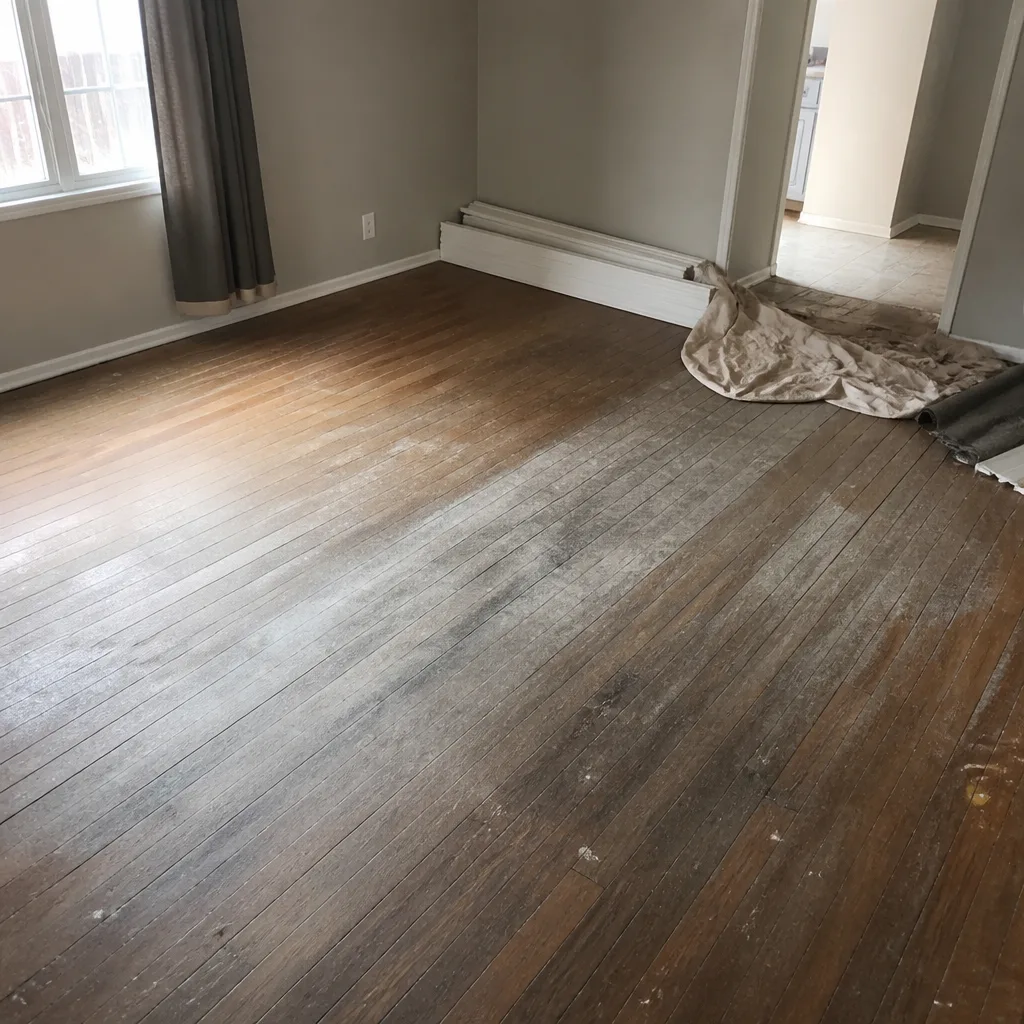 Before
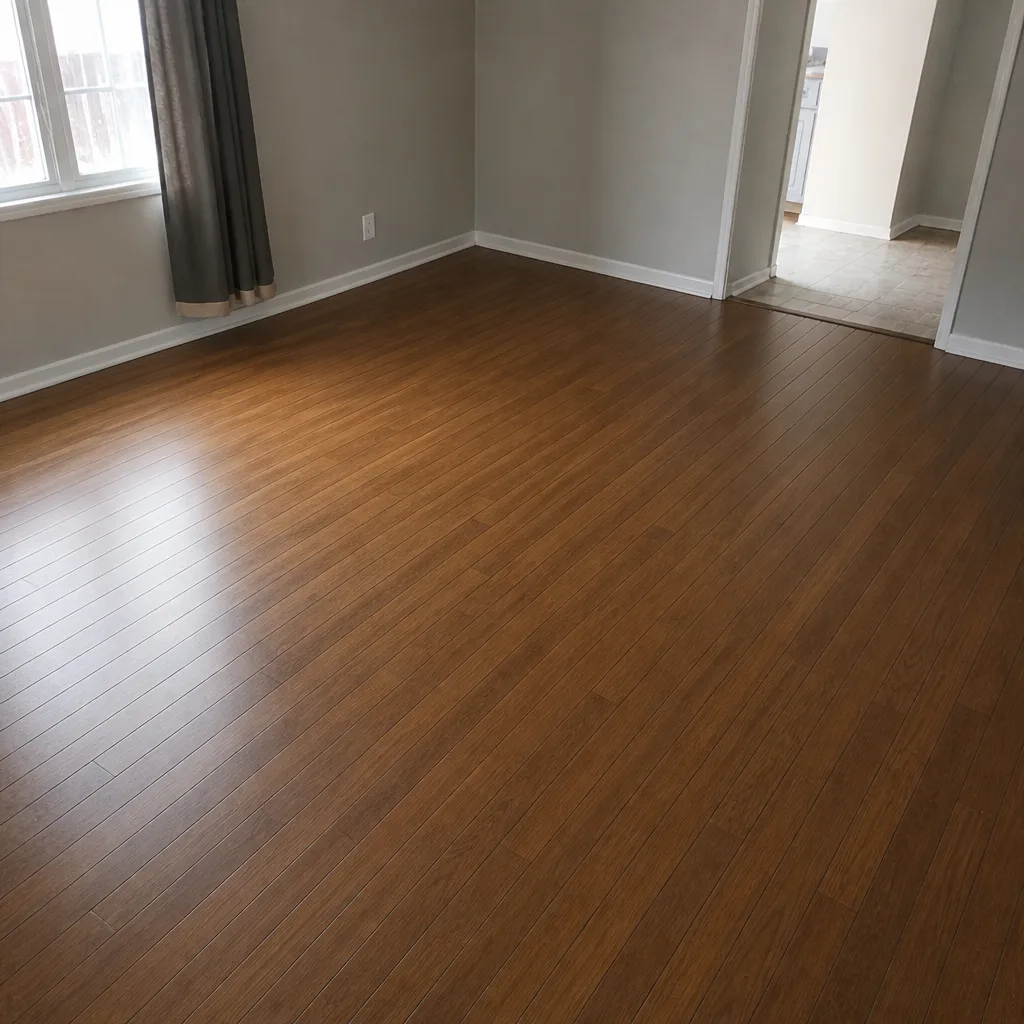 After
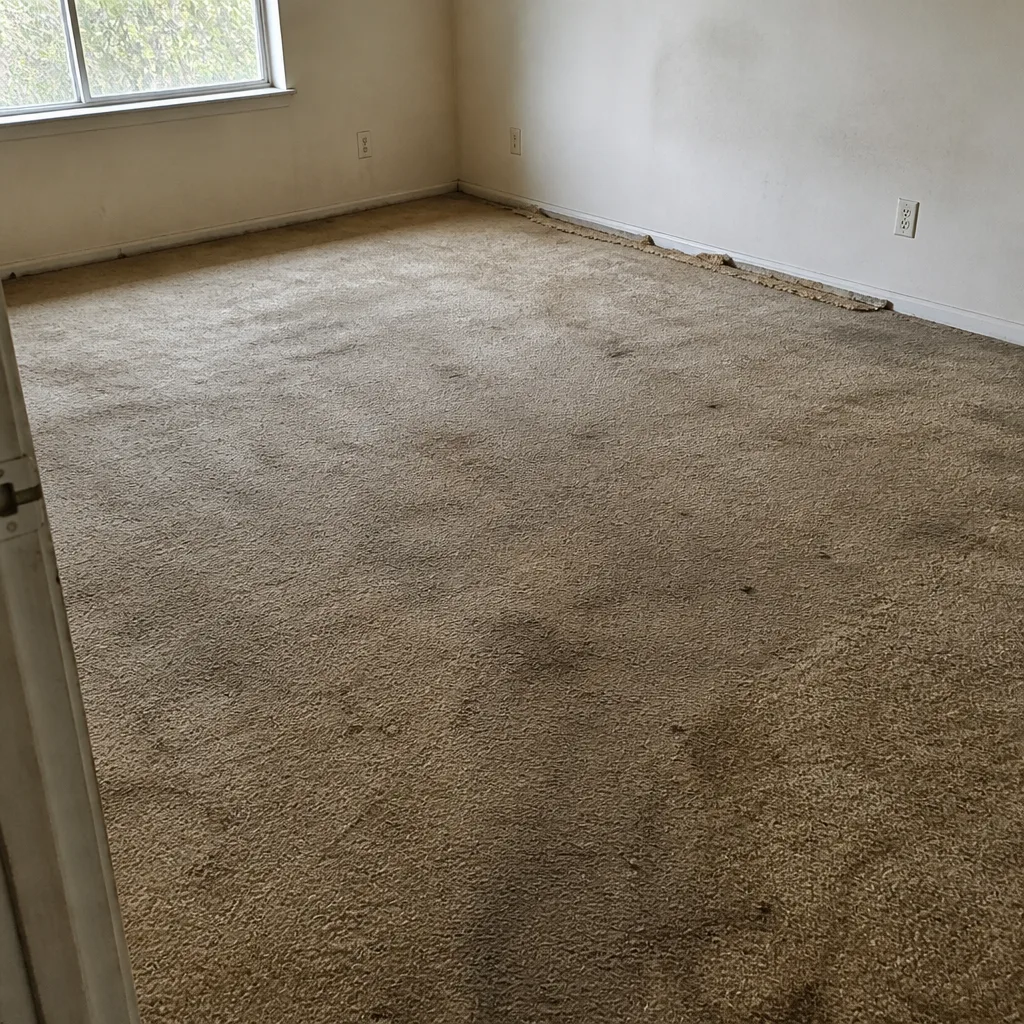 Before
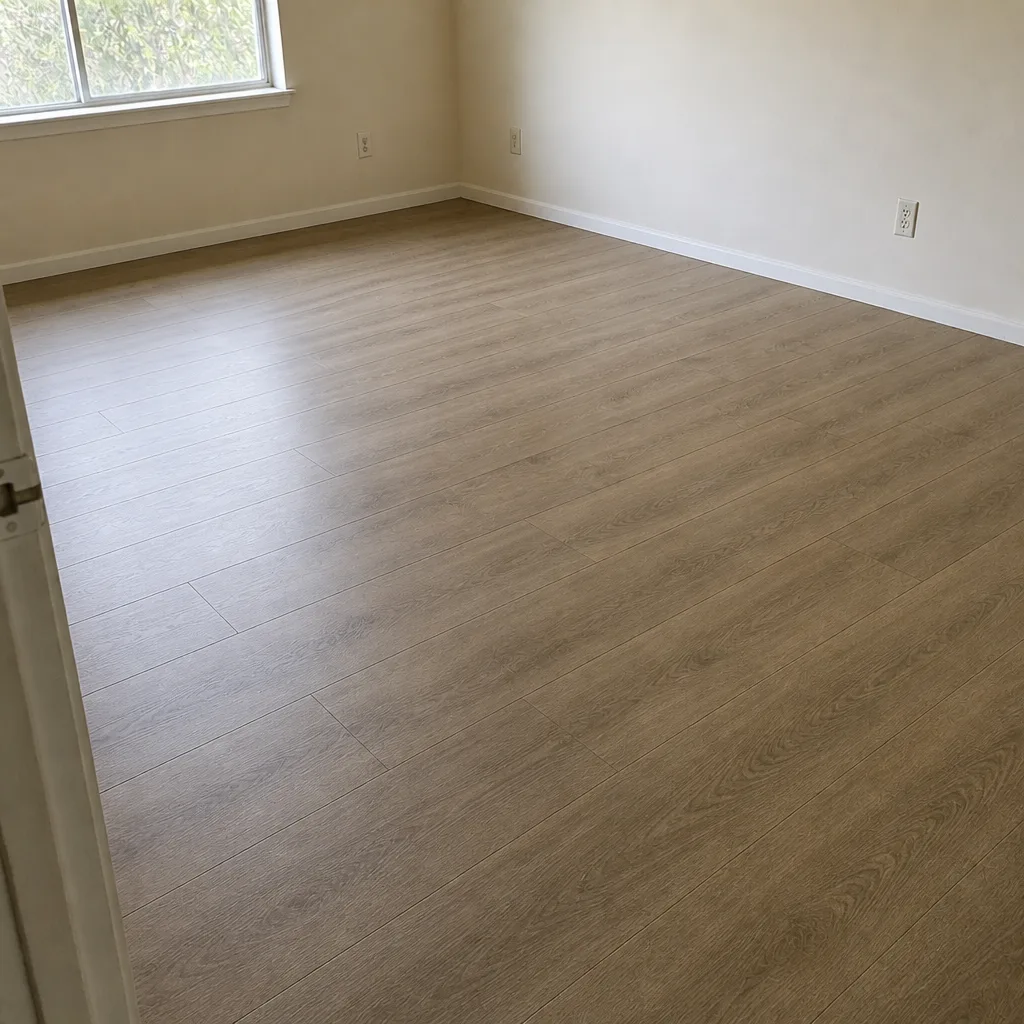 After
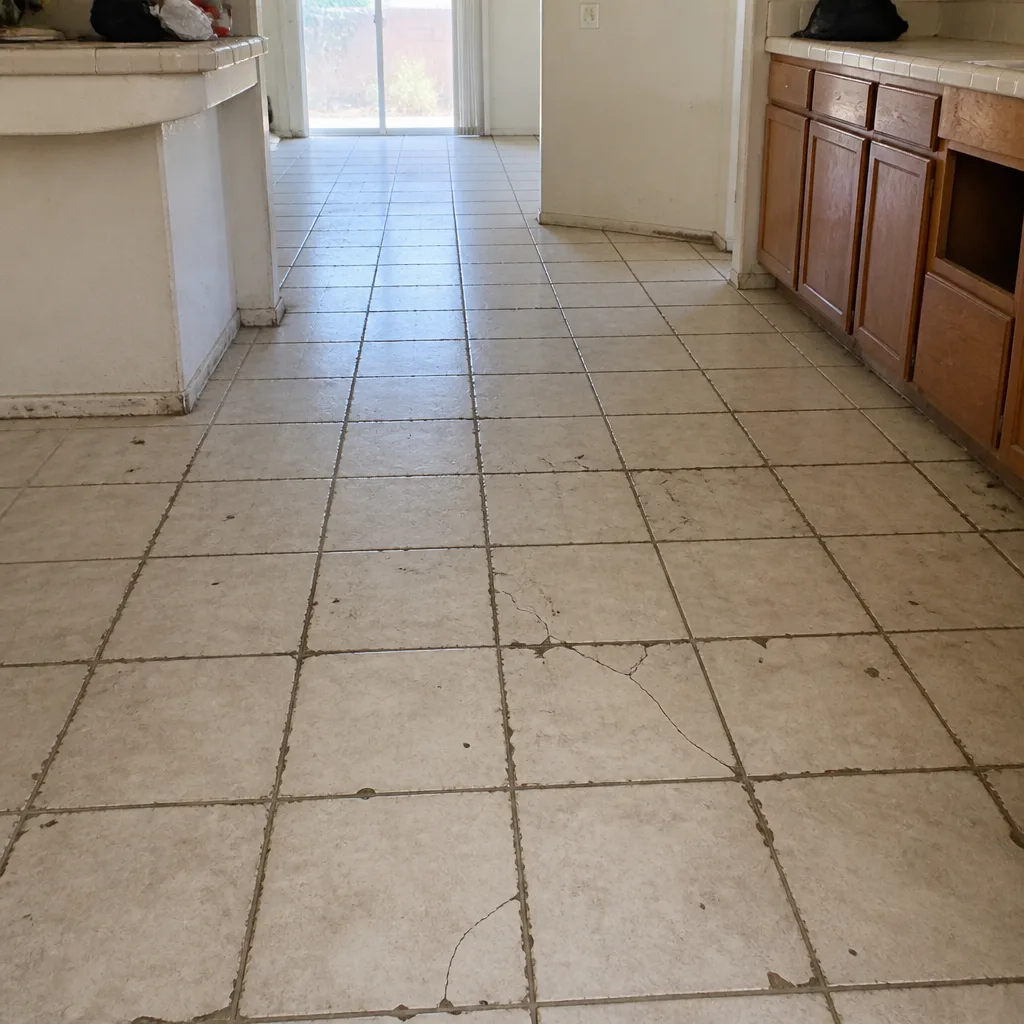 Before
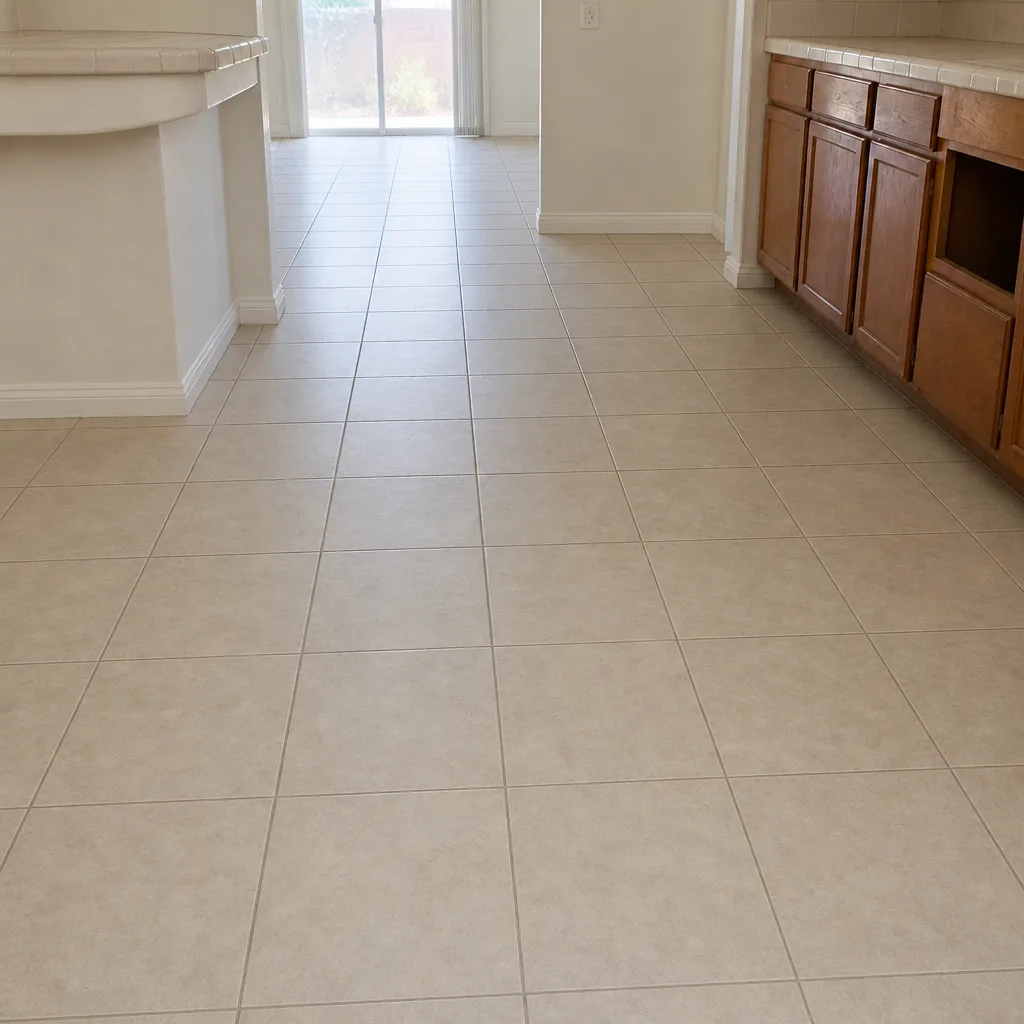 After
When to Call a Professional
Some flooring decisions genuinely need a professional’s eyes. If your existing hardwood has deep gouges, wide gaps, or spots where the finish has worn through, a refinish assessment at the estimate visit tells you whether the floor can be saved or has to be replaced. If your home has a slab that didn’t get a moisture barrier, or you’re installing over a slab you’ve never tested, the wrong install method will cost you. If you’re considering multiple rooms and different materials for different spaces, the recommendation changes room by room, and it’s easier to make as one plan. If you’re weighing refinishing against replacement, that call depends on the wood’s thickness, which is checked in person. Flooring Summerlin offers free estimates in Summerlin. Call (844) 320-6715 to schedule yours.
Frequently Asked Questions
Tile is the more durable choice for kitchens, entryways, bathrooms, and high-traffic areas, while luxury vinyl plank is a warmer and softer option for living rooms, hallways, and bedrooms. The right answer depends on the room, moisture exposure, and how long you plan to stay. Call (844) 320-6715 for a free estimate that matches material to each space in your Summerlin home.
Yes, with the right build-up: a plywood subfloor over a vapor barrier, or a specified glue-down system rated for concrete. Solid hardwood is the most demanding material to put over a slab because wood moves with the seasons and the slab carries a moisture profile that has to be managed. The estimate visit is where we check the slab and set the install method. Call (844) 320-6715 to book yours.
Sometimes yes, sometimes no, and it depends on how much wood is left to sand. A floor with a thick top layer can usually take a refinish; a floor already worn close to the tongue or with previous heavy sandings may not. We measure this at the estimate visit before quoting. Call (844) 320-6715 to schedule a refinishing assessment.
Desert temperature swings across a slab-on-grade foundation push wood to move, and intense sun near large windows fades and dries wood faster than in milder climates. Tile and luxury vinyl plank tolerate those cycles with the least fuss. Engineered hardwood handles a slab well when installed correctly, and solid hardwood performs if the subfloor and moisture plan are right.
Laminate has a wood-fiber core with a photographic wear layer, so it can’t be refinished and it swells when water reaches its edges. Luxury vinyl plank has a plastic core and a resilient wear layer, is water-resistant on top, and handles small moisture changes better. Both float over a slab with a vapor barrier. Which one belongs in your home depends on the room and the traffic. Call (844) 320-6715 for an estimate.
Yes. The in-home measure and the written estimate are free, and the written estimate sets the final price. We measure the rooms, check the current floor and slab, and talk through material options from nine brands before any work is scheduled. Call (844) 320-6715. We answer 24/7. Fast dispatch from 7am to 7pm, Sunday through Friday.
The Bottom Line
The hardwood vs. luxury vinyl plank debate gets framed as an aesthetic choice, and in Summerlin it’s mostly a construction and lifestyle one. Slab-on-grade foundations make tile and luxury vinyl plank the simplest fits, engineered hardwood a solid choice with the right install method, solid hardwood the most demanding, and laminate the right floor for dry, moderate-traffic rooms. The real durability hierarchy hasn’t changed with the trends: tile, then LVP, then engineered wood, then laminate, then solid hardwood for a household with dogs, kids, and heels. Reserve hardwood for the rooms that carry the home, use tile where water lives, and let resale signal follow from a well-installed floor. Get an in-home measure before you decide anything at the material level. Call (844) 320-6715 to schedule your free estimate.
Written by the team at Flooring Summerlin.